Across the UK, we have watched garden expectations change. Homeowners still want a patio that looks sharp in July, but now they also want it to survive February without drama. Cleaning time matters more than ever, yet nobody wants a space that feels flat or soulless. That balance is why searches for paving slabs for gardens increasingly circle around porcelain patio tiles and sandstone slabs.
Both materials answer different priorities. Porcelain appeals to those fed up with algae and constant scrubbing. Sandstone attracts people who want warmth and character underfoot. After years of laying, repairing and revisiting patios in real UK weather, these are the five paving choices we see requested most often and for good reason.
Why Choosing the Right Garden Paving Slabs Matters
Paving slabs for gardens are not just a surface decision. They dictate how often you clean, how safe the space feels in winter and how well it ages in our climate.
We have lifted slabs after five years that looked tired simply because the material was wrong for the site. North-facing gardens, heavy footfall areas and shaded patios all expose weaknesses quickly.
Good paving improves resale appeal, too. Buyers notice clean lines, consistent colour and secure joints. Poor paving shows itself through staining, movement and frost damage. Getting the material right from the start saves money and frustration later.
Porcelain vs Sandstone: Which Garden Paving Material Is Best?
Porcelain and sandstone dominate UK patios for different reasons. In newer housing developments and urban gardens, porcelain leads. In period properties and rural settings, sandstone still holds its ground.
At a glance, the differences are clear.
| Aspect | Porcelain | Sandstone |
| Performance | Extremely hard-wearing with low water absorption | Strong but porous and weather-reactive |
| Appearance | Consistent colour and modern finishes | Natural variation and texture |
| Maintenance | Minimal, rarely needs more than a wash | Needs regular cleaning and sealing |
| Budget | Higher material cost but low upkeep | Lower upfront cost with ongoing care |
Porcelain slabs outperform in durability and frost resistance. Sandstone wins on natural charm. Maintenance is the dividing line. Many homeowners underestimate how much work sandstone needs after a few winters.
Porcelain Slabs Leading Garden Renovations
1. Kandla Grey Porcelain
This option suits homeowners who want the look of natural stone without the work. It solves the common pain points of staining, fading and winter slipperiness.
We have installed plenty of patios where clients initially loved real stone, only to call back after the first wet winter, asking why it looked patchy. Porcelain avoids that conversation. Colour stays consistent, and algae struggles to take hold.
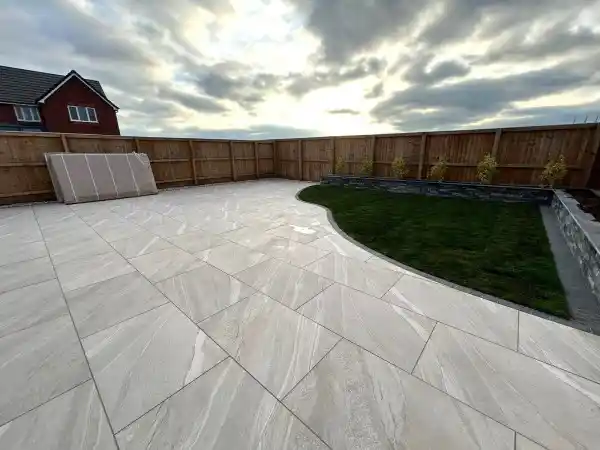
Today, many homeowners switch to porcelain patio tiles because they combine low maintenance with modern looks.
For a premium finish, consider Kandla Grey Porcelain Paving for gardens from Pave Direct, an R11 anti-slip, low-maintenance option that holds colour and texture in UK weather.
2. Valencia Grey Large Format Porcelain
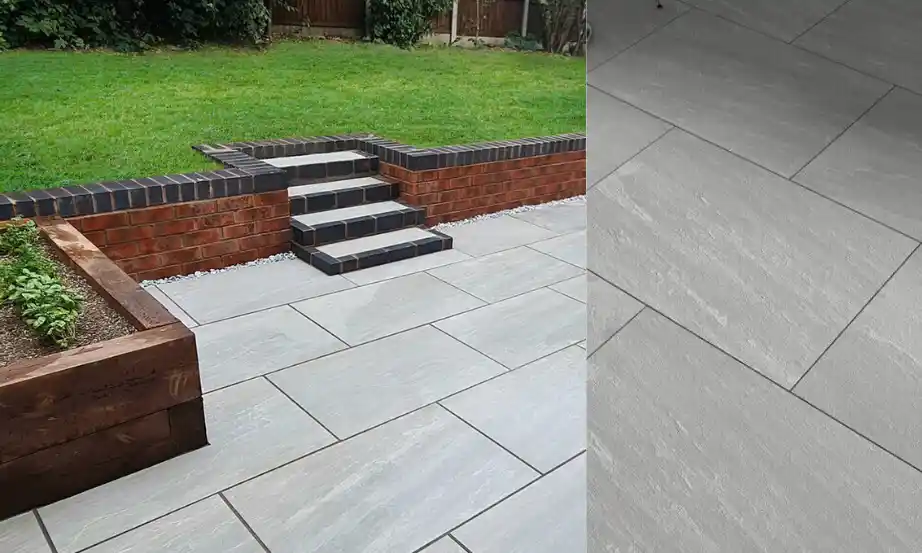
Large-format porcelain slabs are ideal for contemporary layouts. Fewer joints mean a calmer surface and less opportunity for weeds.
This style works best where ground preparation is done properly. We have seen large slabs crack when installers cut corners on the base. When laid correctly, they give a seamless feel that suits open-plan gardens and bi-fold door spaces.
Homeowners choosing paving slabs for gardens with a modern design often lean this way once they see how clean the finished area looks year-round.
3. Concrete Effect Porcelain Slabs
Concrete-effect porcelain attracts those who like industrial style without concrete’s flaws. Real concrete stains easily and can spall in frost.
Porcelain versions mimic the look but resist moisture and freeze-thaw cycles. In shaded courtyards, they stay safer underfoot and do not darken unevenly. They are particularly popular in city gardens where style consistency matters.
Sandstone Slabs Still in Demand
1. Kandla Grey Indian Sandstone
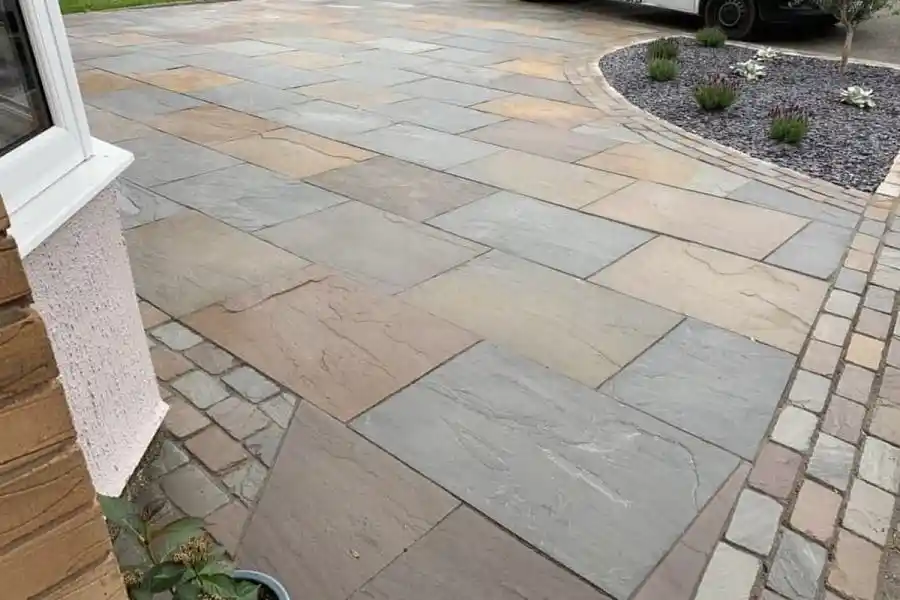
This remains one of the most requested natural paving slabs for gardens. Its soft grey tones work with almost any planting scheme.
Natural variation is its strength and weakness. I have revisited jobs where homeowners loved the character but were surprised by how much sealing was needed to keep it looking fresh. Calibrated sandstone helps with even laying, but it still needs care.
For those happy to maintain, it delivers timeless appeal.
2. Raj Green Indian Sandstone
Raj Green suits traditional and heritage gardens particularly well. Its colour shifts with the light, something porcelain cannot replicate.
It performs best in well-drained areas. In damp spots, it can develop surface algae quickly. Regular sweeping and an annual clean keep it under control. This is a material chosen with the heart rather than the stopwatch.
Practical Buyer’s Decision Guide
Choosing between these options comes down to how the space will actually be used.
- High or Low Traffic: High-traffic family gardens benefit from porcelain because it resists wear and stays safe in wet weather. Quiet seating areas can justify sandstone’s upkeep for the visual reward.
- Slip Resistance: It matters more than many realise. Professionals replace slabs after minor accidents simply because the surface was wrong for a sloping garden. Look for an R11 rating on outdoor porcelain paving where safety is a concern.
- Maintenance Tolerance: If annual sealing feels like a chore now, it will feel worse later. Porcelain asks little beyond basic cleaning.
- Budget: Sandstone costs less upfront but needs products and labour over the years. Porcelain costs more initially but stays stable.
- Thickness and Installation: Porcelain demands a full bed of adhesive and precise levels. Sandstone is more forgiving but still needs a solid sub-base. Cutting corners here shows within months.
For broader garden inspiration and how paving fits into overall design, the renovation features on DeluxeHouse offer useful context.
Conclusion
Porcelain and sandstone both earn their place in UK gardens. Porcelain suits homeowners prioritising durability, safety and low maintenance. Sandstone suits those who value natural character and are prepared for upkeep.
Kandla Grey Porcelain from Pave Direct stands out for balancing appearance with performance. For many modern homes, it removes the usual compromises.
Ultimately, the best paving slabs for gardens are the ones that suit your lifestyle as much as your eye. Get that right, and the patio will quietly do its job for decades.
FAQs on Paving Slabs for Garden Renovations
Are porcelain patio tiles suitable for UK weather?
Yes. Quality outdoor porcelain has low water absorption and strong frost resistance, making it well-suited to wet winters and temperature swings.
Do sandstone slabs need sealing?
In most cases, yes. Sealing reduces staining and algae growth, especially in shaded or damp gardens.
Which paving slabs for gardens are safest in winter?
Porcelain with a certified R11 slip rating generally offers the best wet-weather grip.